


Osteochondrosis: what is it and how is it expressed?This is a fairly common pathology that occurs most often in the elderly, but today it is often observed in young people.In order to choose the right treatment for osteochondrosis, it is necessary to determine the cause of its occurrence and the stage of damage to the body.Well, to recognize this disease, you need to have an idea of what kind of disease it is and everything about osteochondrosis in general.And how to get rid of osteochondrosis and relieve the patient's condition?
What is osteochondrosis?
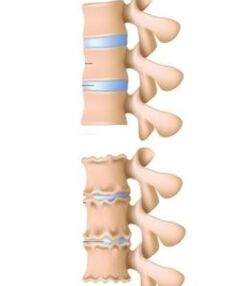
The diagnosis osteochondrosis is a degenerative-destructive disease of the spine.The basis of this disease is a change in the trophism of the vertebrae and intervertebral discs, which leads to a disruption of the normal tissue structure.The cartilage disc becomes inelastic, changes its shape and consistency.The width of the intervertebral spaces narrows and the damaged part of the spine loses its stability.Violation of the correct ratio between the vertebrae is associated with compression of the nerve endings coming out of the spinal cord and the intensity of the back muscles.As a result, neurological symptoms of osteochondrosis and pain appear.
Dystrophic disorders in the disc lead to a reduction in the annulus fibrosus.In this regard, the patient often develops dangerous complications (vertebral hernia, protrusion).
Subsequently, osteochondrosis as a degenerative disease spreads to the small joints of the spinal ridge, the intervertebral joints, and bony outgrowths are formed on the vertebrae.The patient can barely bend or stand;in other words, flexibility disappears, spinal subluxations and spinal distortions (scoliosis, kyphosis) appear.
Depending on the location, the pathology affects:
- cervical region;
- chest;
- lumbar.
The first signs of osteochondrosis do not appear immediately, but gradually.These degenerative damages to bone and cartilage tissue rapidly lead to physiological aging of the body.What is osteochondrosis and how to treat it, you can see below.
What is dorsalgia?
Dorsalgia is a rather complex syndrome that manifests itself in various diseases.It can be associated with both back diseases and other disorders of the internal organs.
It is most often formed as a result of osteochondrosis, spondylosis, disc herniation and severe scoliosis.This syndrome is manifested by mild pain in the damaged area of the back.
Causes of the disease
What causes osteochondrosis?The exact causes of osteochondrosis have not yet been established.There are many predisposing circumstances that cause osteochondrosis, some of them are:
- genetic predisposition;
- changes in metabolic flow in the body;
- intoxication, infectious pathologies;
- smoking, stress lead to narrowing and spasm of blood vessels;
- diseases of the feet that cause an overload of the spine (flat feet);
- overweight, obesity;
- microtraumas of the spine (blows, falls, sharp shocks) and macrotraumas (bruises, fractures);
- age-related changes;
- hypothermia, a sedentary lifestyle, improper nutrition lead to a lack of fluids and vitamins;
- metabolic disorders;
- unique climate (high humidity, low air temperatures).
Osteochondrosis has other causes, and each of them can appear as a result of an incorrect lifestyle.
It is a popular belief that many diseases arise from nerves.Suspicious and temperamental people often suffer from diseases of the joints and spine.
Psychological causes of osteochondrosis can also be noted:
- insomnia, depression;
- stress, nervous breakdowns;
- feeling alone, feeling afraid;
- sad mood;
- psychological pathologies;
- problems in sex life.
The psychology of this disease is not fully established.
Symptoms
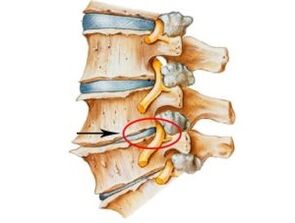
In the case of osteochondrosis, symptoms and treatment will depend on the location of the lesion and the stage of damage.
Symptoms of osteochondrosis of the spine affecting the cervical spine are manifested as follows:
- pain in the parietal, occipital and temporal areas, increasing with turns and movements of the neck;
- tinnitus, hearing loss;
- dizziness, flickering in the eyes, fainting;
- visual impairment;
- changes in blood pressure;
- hoarse voice, snoring;
- tingling.
Symptoms of osteochondrosis of the back affecting the chest area:
- tingling of the skin in the area of the chest, back, abdomen;
- pain when raising the arms, deep inhalation and exhalation;
- painful, pressing, often sharp, sharp pain in the region of the heart;
- discomfort and difficulty turning the body in one direction or another;
- severe pain in the spine.
Symptoms of osteochondrosis in women and men with damage to the lumbar region:
- feeling of numbness, tingling, goosebumps in the legs, buttocks;
- profuse sweating;
- pain in the lumbar region, transmitted to one or both legs;
- varicose veins of the lower extremities;
- feet freeze even at high temperatures;
- Women have irregular menstruation, men have potency disorders.
When the treatment of osteochondrosis and the symptoms are already long and advanced, the damaged vertebrae fuse, the patient is tormented by the inability to move in one or another area of the spine, and the pain usually decreases or disappears completely.How to treat osteochondrosis of the spine?
Diagnosis
If you have osteochondrosis, what should you do and how to overcome it?Before starting treatment for osteochondrosis of the back, the attending physician must correctly establish the diagnosis by initially examining and interviewing the patient.And yet, how to recognize osteochondrosis?
To confirm the pathology, you need to go through the following research methods:
- computed tomography, which detects the condition of the intervertebral discs, their structure, shape, compression of nerve endings, deformations;
- MRI, revealing the smallest injuries in the spine area, is used when CT cannot show the exact result;
- radiography, establishes the degree of damage to the vertebrae, their location and type of bones;
- Doppler ultrasound detects the degree of change in blood flow through the capillaries that saturate the spinal cord and other organs.
Sometimes a thorough examination can reveal related pathologies that occur in the event of a complication of this disease (hernia, radiculitis, protrusion, kyphosis).
The diagnostic feature is of the greatest importance, since many symptoms and signs are very similar to the symptoms of other diseases, and the centers of pain can be the spinal process, as well as a damaged intervertebral disc.
How to treat osteochondrosis of the spine?
Treatment of osteochondrosis of the spine is a rather long process that involves the complex use of drugs;you will also need a specific treatment regimen for osteochondrosis and an individual approach to each patient.The choice of the necessary treatment regimen for each patient is determined by the nature of the pathological disorders, the condition of the person and the presence of complications of the disease.
Also an important condition for how to deal with osteochondrosis is staged treatment.First of all, during an exacerbation of osteochondrosis, treatment is aimed at eliminating pain.The patient is recommended to rest, use special collars and corsets designed for self-unloading of the spine.External and internal treatment with medication and physical therapy procedures will be necessary.
Then procedures will be needed that can prevent the formation of new exacerbations (therapeutic exercises, reflexology, manual therapy, massages).
medicines
Is it possible to treat osteochondrosis with drugs?Medicines should be used during an exacerbation of the disease.They help reduce symptoms and influence individual etiological factors in the development of the disease.
The most commonly used drugs for the treatment of osteochondrosis are:
- Nonsteroidal anti-inflammatory drugs.They have an analgesic effect, quickly relieve inflammation and can reduce the elevated temperature of the damaged tissues of the spine.These products are used in the form of injections, ointments, gels and tablets.
- Muscle relaxants.They fight against increased muscle tone that can often appear in this pathology.
- Chondroprotectors.They reduce the processes of destruction of cartilage and lead to its restoration.
- Pain relieversfor local effects (pepper patch, compresses).
- Vitamins E, B1, B2, B6.Increase metabolism, restore damaged tissue.It is better to use them in the form of injections.
- Vasodilator drugs.Designed to eliminate vascular spasms.
- Glucocorticosteroids.Relieves swelling, inflammation, increases the effect of muscle relaxants, NSAIDs.
- Angioprotectors.Restoration of blood flow, metabolism, capillary muscle tone.
Physical therapy
With a disease of the spine, the symptoms can be expressed, so only a specialist can advise what to do with osteochondrosis.
Exercise therapy or physiotherapy is an effective treatment for osteochondrosis, because gymnastics to strengthen the muscles of the back leads to the development of a muscle corset, and this makes it possible to evenly distribute the load on the spine.Thanks to constant procedures, blood circulation is restored, tissue nutrition is restored and movements become easier.
For example, special breathing exercises reduce muscle spasms and relieve pain.But swimming can significantly relax and ease the spine.
However, for the effectiveness of physiotherapy and safety, exercises should be performed only after the removal of acute symptoms of the disease.
Physiotherapy treatment
In addition to drugs, the treatment of osteochondrosis of the back also includes physiotherapeutic measures.They help speed up the recovery process and continue to be used throughout the remission period outside of exacerbations.There are many physiotherapy methods and many of them are practiced specifically for osteochondrosis and back treatment, for example:
- Magnetotherapy– restores metabolic processes, reduces inflammation, tissue swelling and pain.
- Electrophoresis.Medicines used during this procedure promote analgesic results, improve blood flow to damaged tissues and normalize metabolism.
- Manual therapy– reduces pain, joint mobility may appear.
- Laser therapy- normalizes blood circulation, reduces inflammation, pain, stimulates tissue regeneration.
- Acupuncture.Special needles can relieve pain, relieve inflammation and stimulate metabolic processes.
- massage.Osteochondrosis of the spine can be cured with the help of therapeutic massage, which removes pain, restores muscle tone, as well as nerve conduction.
- Tractionfor the disease osteochondrosis of the spine in adults.It helps to normalize mobility, blocks the progression of the disease and the manifestation of complications.
It happens that the doctor prescribes a whole set of such procedures to one patient at once.This usually depends on how osteochondrosis manifests itself and related diseases.The duration of the course is from 10 to 15 days.It is recommended to repeat them 3-4 times during the year.In this regard, it is possible to reduce the rate of progression and the frequency of complications several times.
Surgical treatment
Is osteochondrosis treated surgically?With osteochondrosis of the spine, treatment is possible in this way.The reason for this intervention may be the patient's late visit to the doctor, the presence of complications or the failure of conservative treatment.
Any type of surgical intervention helps to eliminate pressure on the spinal cord and roots.When a person has an intervertebral hernia, then the damaged disc and the hernia itself are completely removed.
The surgical method is associated with a certain degree of risk and is performed in emergency cases.
Of course, it is unlikely that you will get rid of osteochondrosis forever, but with the help of drugs, physiotherapy measures and massages, you can forget about the unpleasant symptoms of the disease for a certain period of time.